
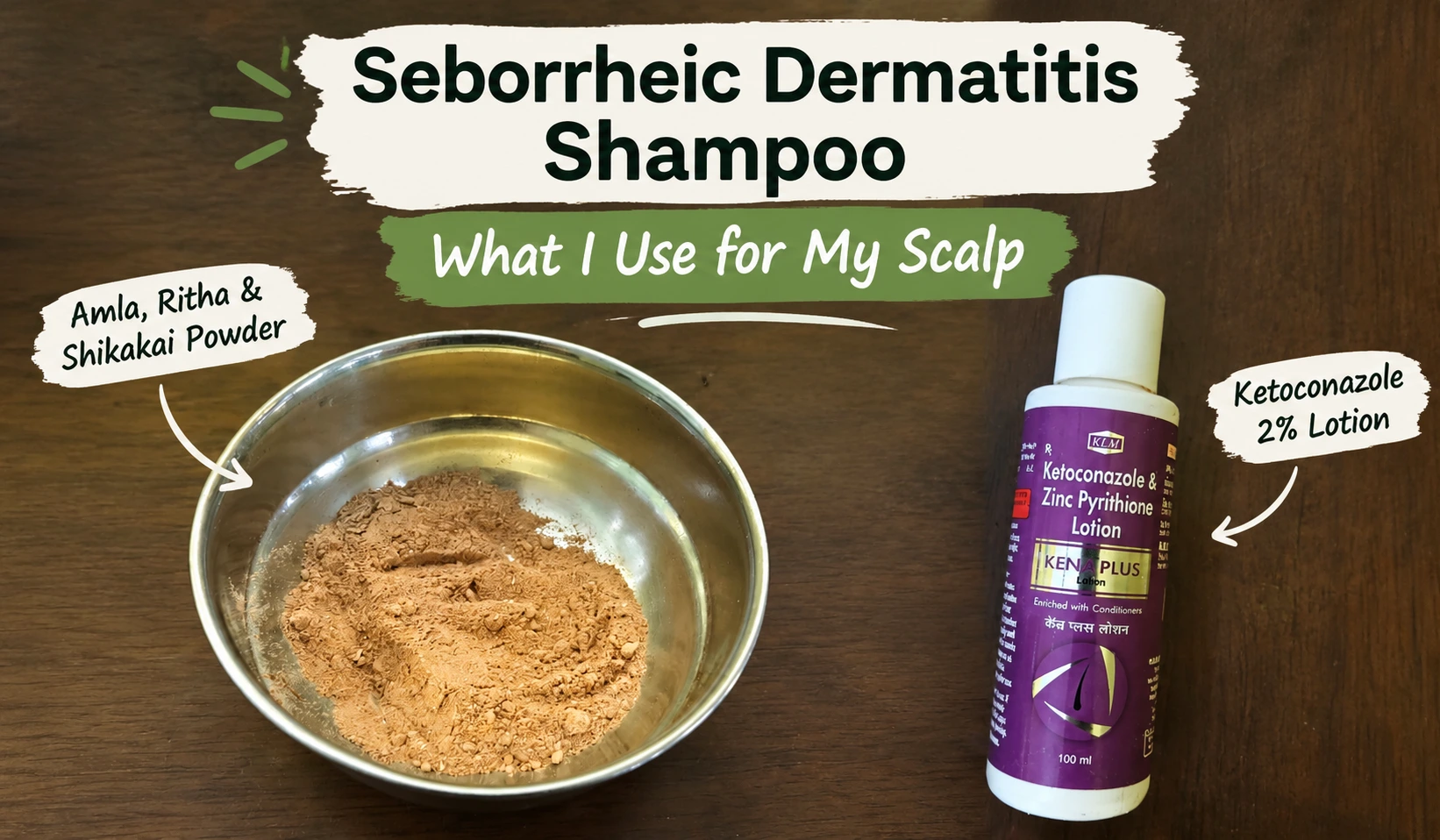

Finding the right shampoo for seborrheic dermatitis is simple: dermatologists suggest ketoconazole 2% shampoo, and it works really well for maintaining scalp health.
I have been using the Ketoconazole shampoo for a very long time, and it is doing the job well, but for me personally, it makes my hair too dry and thin.
And the normal shampoos were not great for my hair and scalp either. I also tried baby shampoos, as they are gentle and have very few chemicals, but they were not good enough for cleansing my scalp.
Ok let’s get to the point: What shampoo do I use currently?
So currently, I use two types of shampoo as part of my routine.
The first I use is ketoconazole 2% shampoo once or twice a week, depending on how my scalp is doing. On the other days, I use a natural homemade shampoo made with amla, ritha, and shikakai.
This combination has worked well for me, so I wanted to share exactly how I use these shampoos and why I prefer keeping both in my routine.
1. Ketoconazole Shampoo
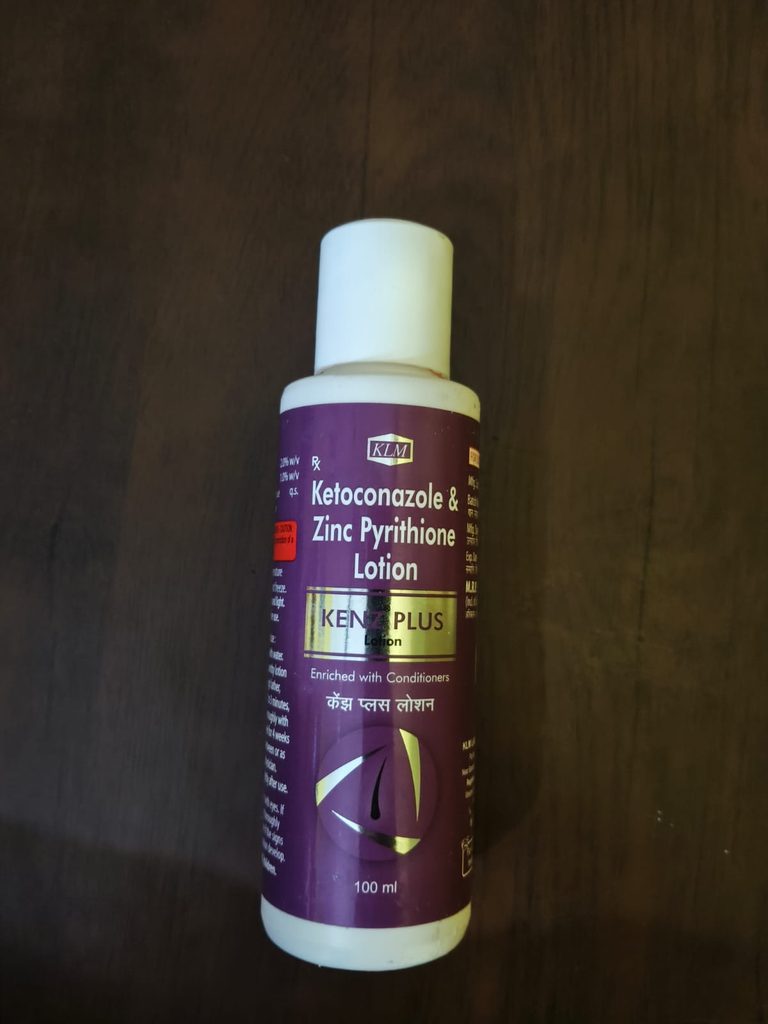
Ketoconazole shampoo is the medicated shampoo that I use when my scalp needs more attention.
I generally use ketoconazole 2% shampoo once or twice a week, depending on the condition of my scalp. If my scalp is doing well, I may use it once a week. If I notice more flaking or irritation, I may use it twice a week.
Ketoconazole is an antifungal medicine used to treat seborrheic dermatitis and dandruff. It works against fungi, including Malassezia, which is associated with seborrheic dermatitis.
For me, ketoconazole is the medicated part of my routine, while my homemade shampoo is what I use for regular cleansing.
When using ketoconazole shampoo, I follow the instructions that come with the product. It is generally important to apply it to the scalp rather than treating it like an ordinary shampoo, and to keep it on the scalp for at least 3-5 minutes to let it work before rinsing off as suggested by dermatologist.
2. My Natural Shampoo: Amla, Ritha and Shikakai
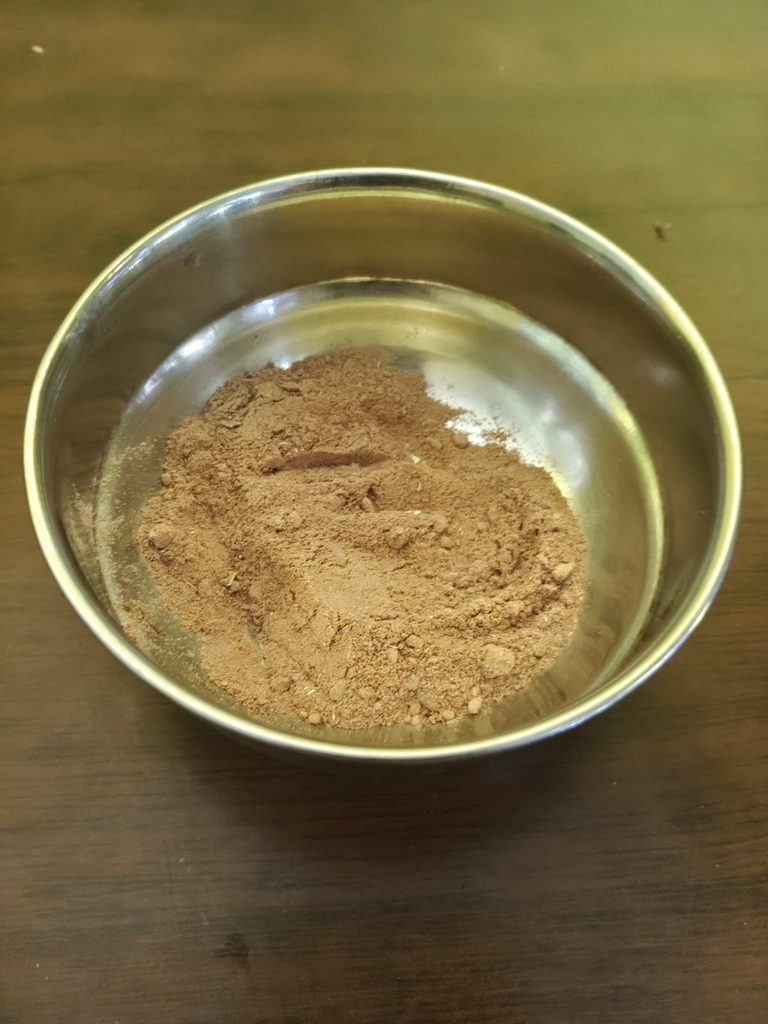
On the rest of the days, I use a natural homemade shampoo made with amla, ritha, and shikakai.
These three ingredients have traditionally been used in Indian hair care for a long time, and I like using them as a natural way to cleanse my scalp and hair.
Amla
Amla, also known as Indian gooseberry, is one of the main ingredients in my homemade shampoo.
Amla is traditionally used in hair care and contains vitamin C and various plant compounds. It is commonly used to help keep the hair and scalp feeling clean and healthy.
I particularly like amla because it is a simple natural ingredient that fits well into my regular hair-care routine.
Ritha
Ritha, also called soapnut, is probably the most important ingredient in my homemade shampoo when it comes to cleansing.
Ritha naturally contains saponins, which produce a lather when mixed with water. This is why soapnuts have traditionally been used as a natural cleanser.
For me, this makes ritha useful in a homemade shampoo because it helps remove dirt, sweat, and excess oil from my hair and scalp.
I don’t need a heavily foaming commercial shampoo every time I wash my hair. Ritha gives my homemade shampoo its natural cleansing properties.
Shikakai
The third ingredient is shikakai.
Shikakai has also been traditionally used in Indian hair care as a natural cleanser. It contains naturally occurring saponins and is often used for washing hair.
I like adding shikakai to my homemade shampoo because it works well with amla and ritha and also helps remove dandruff with its antifungal properties.
For me, the combination provides a simple natural way to wash my hair on the days when I am not using ketoconazole.
Check the natural shampoo at amazon
So, in my routine, the Ketoconazole shampoo is my medicated shampoo, which I use once or twice a week depending on my scalp condition.
And the amla, ritha, and shikakai shampoo is my natural cleanser, which I use on the remaining days, and it is good for my hair and scalp with no noticeable side effects.
This routine allows me to keep my scalp clean without using ketoconazole every time I wash my hair.
For me, this has become a simple routine that I can maintain consistently.
To round things up, this is how my weekly shampoo routine looks:
- Ketoconazole 2% shampoo: Once or twice a week, depending on my scalp condition.
- Amla, ritha, and shikakai shampoo: On the other days when I need to wash my hair.
- I adjust the frequency according to how my scalp is behaving.
I don’t follow a rigid schedule because my seborrheic dermatitis isn’t the same every week.
If my scalp is calm, I don’t feel the need to use ketoconazole as frequently. If I notice more flaking or irritation, I may use it twice during the week.
And one thing to mention is that Amla, ritha, and shikakai are useful natural cleansing ingredients, but I don’t consider them a medically proven treatment for seborrheic dermatitis.
I use them because I like how they work as a natural shampoo and because they fit into my overall scalp-care routine.
Another thing to keep in mind is that even natural shampoos can cause dryness if overused. Ingredients like ritha and shikakai are potent natural cleansers, and using them too frequently can strip away the natural oils from your scalp and hair.
If you use this mix too often, it can leave your hair feeling rough or brittle. So, finding the right wash frequency for your hair type is key to getting the benefits of natural cleansing without stripping away essential moisture.
If you want to try the homemade shampoo, remember that everyone’s scalp is different. A natural ingredient can still cause irritation or an allergic reaction, so stop using it if your scalp becomes more irritated.
And after washing your hair, if you feel dryness or fizziness, you can use a mild conditioner also on your hair tips.
I personally use MCT oil on my hair tips after every wash to avoid dryness.
Also Read: My full Seborrheic Dermatitis Journey
Are Shampoos Enough to Manage Seborrheic Dermatitis?
In my experience, shampoo alone is not enough to keep seborrheic dermatitis under control.
Shampoo is an important part of my routine because keeping my scalp clean and managing the flaking is necessary, but I have also noticed that my overall lifestyle and diet can affect how my scalp behaves.
For me, certain foods seem to make my seborrheic dermatitis worse, particularly when I have too much dairy or oily food. When I eat these foods regularly, I feel that my scalp becomes more oily and I am more likely to experience flaking, redness, or irritation.
That is why I try to keep these foods limited. I don’t completely avoid them, but I have them occasionally rather than making them a regular part of my diet.
I also try to avoid eating too much high-sugar and heavily processed food. I have found that keeping my diet relatively simple works better for me.
However, this is based on my own experience, and food triggers can be different for everyone.
So, for me, managing seborrheic dermatitis isn’t just about finding the right shampoo or medicine. It is a combination of keeping my scalp clean, using ketoconazole when needed, using my natural shampoo on other days, and paying attention to the foods and lifestyle habits that seem to trigger my flare-ups.
This is the approach that has worked best for me after dealing with seborrheic dermatitis for more than 10 years.
[…] it overnight (you can keep it for 30 mins to 1 hour too) and just wash it off with my shampoos. Why shampoos? Read the linked article to know […]
[…] very simple: I use the Ketoconazole shampoo on my beard area and the red patches where I usually have the problem. I keep it on for 1 to 2 […]